We explore philosophy, politics, economics, and other ideas from a classical liberal perspective.
Episodes

Wednesday Dec 30, 2020
Wednesday Dec 30, 2020
It's our 2020 roundup episode! Alex Aragona chats with Matt Bufton and Sabine El-Chidiac about topics and ideas surrounding liberalism in the past year, and choose their favourite Curious Task episodes from 2020.
References from Episode 74 with Sabine El-Chidiac and Matt Bufton
- Matt mentions the 1992 Los Angeles riots stemming from the police brutality against Rodney King. An article on these incidents can be found on National Public Radio’s website at this link.
- You can learn more about the international movement to defund the police here.
- Matt briefly talks about polls coming from the United States on whether parents would mind their children marrying across party lines. One such poll was conducted by YouGov and can be accessed here.
- You can register for Stephen Davies’ upcoming online lecture with the Institute for Liberal Studies (Friday, January 15 at 12:00 PM) here! If you need a refresher on Steve Davies’ episode with The Curious Task, consider giving it a relisten at this link.
- Sabine reference’s Steve Horowitz’s book Hayek’s Modern Family: Classical Liberalism and the Evolution of Social Institutions as well as a previous Curious Task episode with him (titles hyperlinked).
- Matt notes that fusionism was at its peak during the Reagan era. The Intercollegiate Studies Institute has an article recounting the relationship between Reagan and libertarians in this article.
- Mises Wire has an article about Murray Rothbard and War and his effort to unite anti-Vietnam war sentiment in the United States. This work is available for viewing here.
- Moderna’s coronavirus vaccine design occurred over two days and can be read in detail in this article by Business Insider.
- If you are interested in Maude Barlow’s criticisms of economic globalization and trade, visit this page on The Council of Canadians’ website that recaps Barlow’s interview with CBC Radio.To delve deeper into the discussions on educational alternatives and belief in experts, Episode 53 and Episode 65 of The Curious Task provides a holistic overview.
- The Curious Task in Review: Our Producers’ Favourite Episodes From 2020!
- Matt recommended Episode 40 with Pete Boettke: “What Is The Curious Task of Economics?”
- A great primer for the rest of this podcast
- Sabine recommended Episode 29 with Jacob Levy: “How Should Liberals Think of Civil Society?”
- Explores the greater themes in liberalism, such as tensions between pluralism and rationalization and in-group and out-group oppression
- Alex recommended Episode 60 with Eric Schliesser: “What Is Neoliberalism?”
- May be a part of the project of rehabilitating the connotations of neoliberalism and other permanent frustrations with the term
- Matt recommended Episode 40 with Pete Boettke: “What Is The Curious Task of Economics?”
Wednesday Dec 23, 2020
Wednesday Dec 23, 2020
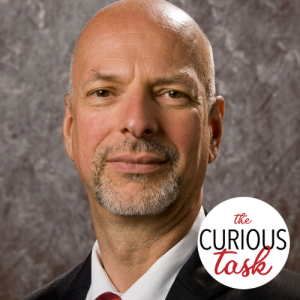
Alex Aragona speaks with Mike Tanner as he explores the factors that contribute to the persistence of poverty, and different policy recommendations that can help alleviate it.
References from Episode 73 with Mike Tanner
- Mike Tanner is the author of Going for Broke: Deficits, Debt, and the Entitlement Crisis, Leviathan on the Right: How the Rise of Big Government Conservatism Threatens Our Freedom and Our Future, and The Inclusive Economy: How to Bring Wealth to America’s Poor. All titles are hyperlinked and available for purchase on Amazon Canada.
- You can read more about the United States’ government spending on anti-poverty policies and programs at the University of Michigan’s Poverty Solutions website here.
- Mike likens the final step of self-actualization in Maslow’s Hierarchy of Needs to the policy goal of self-sufficiency for welfare programs. An explanation of the Hierarchy can be accessed here in a study by Robert J. Taormina and Jennifer H. Gao.
- Articles by the Cato Institute and the Foundation for Economic Education discuss how poverty traps are a fixture of the welfare system (organizations hyperlinked).
- Here is a study by Elaine Maag, C. Eugene Steuerle, Ritadhi Chakravarti, and Caleb Quakenbush on how marginal tax rates are at a high point for those who leave welfare and take their first job.
- Mike references a poll conducted by the Cato Institute on whether the government should prioritize welfare spending or economic growth, which can be found at this link.
- This article by the Foundation for Economic Education on the Davis-Bacon Act features Walter Williams’ congressional opinion on the union labour as well as Miles Allgood’s sponsorship of Act, both of which were quoted in the podcast.
- Mike looks to William Julius Wilson’s theory on “marrigiablility” and how that may be impacted by criminal convictions. This theory was developed in his work, The Truly Disadvantaged: The Inner City, the Underclass, and Public Policy, and is available for purchase on Amazon Canada here.
- Here is an investigation by the United States Department of Justice into the Ferguson Police Department following the murder of Michael Brown. The report investigates topics Mike touches on in the podcast, including how fines from parking violations can be a large source of revenue for the police.
- Here is the Wikipedia article on the murder of Eric Garner that was mentioned by Mike during the episode.
- Here is a link to an education watchdog’s cross-sectional study of the mathematical and reading proficiencies of students hailing from different neighbourhoods in Oakland that Mike mentions briefly this episode.
- To complement Mike’s discussion on zoning, The Local Government Commission released a report on single-family zoning and affordable housing supply in California and can be accessed through this link. A local news release on Former Labour Secretary Robert Reich’s preventative housing development efforts in Berkeley can be found here.
- Here is an entry by Dean Karlan, Aishwarya Lakshmi Ratan, and Jonathan Zinman in The Review of Income and Wealth on how inaccessible banking may be a barrier to reducing poverty.
Wednesday Dec 16, 2020
Wednesday Dec 16, 2020
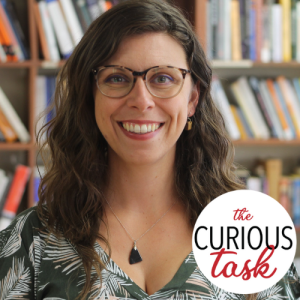
Alex Aragona speaks with Janet Bufton as she explores where and how the tenets of classical liberalism come into play for those who call themselves libertarians.
References from Episode 72 with Janet Bufton
- Janet Bufton manages the Liberal Studies Guides project and is a consultant at Adam Smith Works, whose websites have been hyperlinked.
- You can read more about Adam Smith’s thoughts on a system of natural liberty, the rules of commercial society, and the decisions people make at the Stanford Encyclopedia of Philosophy at this link.
- Follow this link to learn more about the non-aggression principle as libertarian philosophy.
- In the podcast, Janet mentions Adam Smith’s caution against business people who can turn economic power into political power to harm consumers. His argument against monopolies was summarized by Heinz D. Kurz in the article, Adam Smith on markets, competition, and violations of natural liberty, available here.
- Alex and Janet discuss how Milton Friedman identified differently overtime: early into his career he described himself as a neoliberal, which is evident in his essay, Neo-Liberalism and its Prospects, (The Curious Task also dedicated Episode 60 with Eric Schliesser to discussing neoliberalism) and later as a “liberal without adjectives” on The Donahue Show, and towards the end of life, he advocates for consequentialist freedom (all references hyperlinked).
- Like Milton Friedman, Murray Rothbard strongly identified as a libertarian (as evident in his work, For a New Liberty: The Libertarian Manifesto, which can be accessed at this link) but along with Rockwell was a pioneer of the paleo-libertarianism movement which aimed to unite traditional conservatives. Its origin story first featured in Rothbard’s essay, Right-Wing Populism: A Strategy for the Paleo Movement, which available for reading at this link.
- Here is the Wikipedia article for Ron Paul’s 2012 Presidential Campaign, where he ran with the Republican Party on principles such as anti-war but economic freedom.
- Robert Nozick coined the term “nightwatchman state” in his work, Anarchy, State, and Utopia, which can be purchased on Amazon Canada at this link.
- The Freeman was a libertarian magazine by the Foundation for Economic Education that was consulted by Ronald Reagan. Archives of the magazine can be accessed on the FEE’s website at this link.
- This link will direct you to a historical run-down of fusionism by Libertarianism.org.
- Janet references Steve Davies’s appearance to discuss the pandemic on Episode 45 of The Curious Task. If you would like a refresher on the topics covered in that episode, here is the link.
- More readings on cosmopolitanism are available at this link.
Wednesday Dec 09, 2020
Wednesday Dec 09, 2020
Alex Aragona speaks with David Skarbek as he explores the different governance structures that prisoners live under and create in prisons around the world.
References from The Curious Task Episode 71 with David Skarbek
- You can purchase The Puzzle of Prison Order by David Skarbek He looks specifically at the American prison system in his earlier book The Social Order of the Underworld, which is available for purchase here.
Wednesday Dec 02, 2020
Wednesday Dec 02, 2020
Alex Aragona speaks with Mustafa Akyol as he explores whether Islam can be compatible with liberalism, and his recent research on freedom in Muslim-majority countries.
References from Episode 70 with Mustafa Akyol
- Mustafa Akyol is the author of Rethinking the Kurdish Question: What Went Wrong, What Next? (Turkish), Islam Without Extremes: A Muslim Case For Liberty, The Islamic Jesus: How the King of the Jews Became a Prophet of the Muslims, and his book set for release in April 2021, Reopening Muslim Minds: A Return to Reason, Freedom, and Tolerance (all available titles hyperlinked to Amazon Canada store pages).
- You can read Mustafa’s articles featured on his profile on the CATO Institute’s website at this link.
- The concluding segment of this podcast was dedicated to discussing Mustafa’s findings in his study, Freedom in the Muslim World, which was published on the Cato Institute’s website and is available for reading here.
- Mustafa quotes the observation that Islam had compatible socio-legal setups for embracing liberal society early on had it abided by its foundational teachings from Professor David Forte’s article, Islam’s Trajectory. This article can be read on the Foreign Policy Research Institute’s website at this link.
- One of the themes in his upcoming book, Reopening Muslim Minds, Mustafa cites Ash’arism as one of the theological paradigms predating modernity which gave rise to the insularity in Islamic philosophy towards thoughts not originating from revelation. The journal Studia Islamica has an article recounting the religious history of Ash’arism and can be accessed at this link through an active JSTOR account.
- Mustafa briefly mentions the Euthyphro Dilemma (Wikipedia), Divine Command Theory (Michael W. Austin, Eastern Kentucky University), and Ethical Objectivism (Oxford Reference) whilst discussing the different camps in Islamic thought. More can be read about these topics through their respective hyperlinks.
- You can read more about philosopher John Locke’s premises on toleration of religion and heresy here (A Letter Concerning Toleration courtesy of McMaster University), as well as his view on the separation of church and state at this link (Liberty Fund).
- While literature on Islamic liberalism is vast, a good place to start is this article titled What Is Liberal Islam?: The Sources of Enlightend Muslim Thought featured in the Journal of Democracy at this link.
- This article on Deutsche Welle summarizes the domestic and international tensions stemming from the cartoons of religious caricatures that were published in France.
- Mustafa quotes Daniel Philpott’s book, Religious Freedom in Islam: The Fate of a Universal Human Right in the Muslim World (available on Amazon Canada), about how Islam “had seeds of freedom, but those seeds need to be cultivated.”
- You can read the excerpt where the French jurist, Jean Bodin, commended the religious freedom of the Ottoman empire compared to the denominational violence amongst Christians in Europe in Daniel Goffman’s book, The Ottoman Empire and Early Modern Europe here.
- Here are Wikipedia articles to the controversy of Islamic scarfs in France, policing over the burkini, and Saudi Arabia’s legislation on public head coverings for women.